
In the competitive field of orthodontics, having a strong online presence is no longer just “nice to have” it is crucial for attracting new patients.
At Kharb Media, our team has over 15+ years of combined experience in digital growth, and we have seen a massive shift in how patients find care. Most people search for local services online, and if your practice doesn’t appear at the top of search engine results, you are missing out on potential business.
Competition among dental clinics is tougher than ever. Before booking an appointment, patients are doing their homework searching Google, reading reviews, and comparing practices online. If your clinic isn’t showing up, you are invisible.
This guide is not just another generic marketing article. We have synthesized data and strategies specifically for local seo for orthodontists to help you secure that coveted #1 spot in local search results.
Table of Contents
What Is Local SEO for Orthodontists?
Local SEO (Search Engine Optimization) is the process of improving your online presence so your dental practice appears in searches made by people in your area.
Unlike general dental SEO, which might target broad keywords like “what are braces,” local SEO focuses entirely on geography and proximity. When someone in your city searches for “orthodontist near me” or “Invisalign [city name],” Google’s algorithm decides which clinics to show first.
Why It Matters for Your Practice
For orthodontists, local SEO is important because patients almost always choose a provider close to home or work. Very few will drive across town when there is a competitor just around the corner showing up first in Google.
- High-Intent Traffic: Patients searching for terms like “Invisalign in Dallas” aren’t just browsing; they are actively looking for care.
- The Map Pack Power: Research shows that the top three listings in Google Maps (the Local Map Pack) capture more than 70% of all clicks.
- Cost-Effective Growth: Unlike Google Ads, where you pay every time you want visibility, strong local rankings keep bringing in patients even if you stop spending money on ads.
The Foundation: Optimizing Your Google Business Profile (GBP)
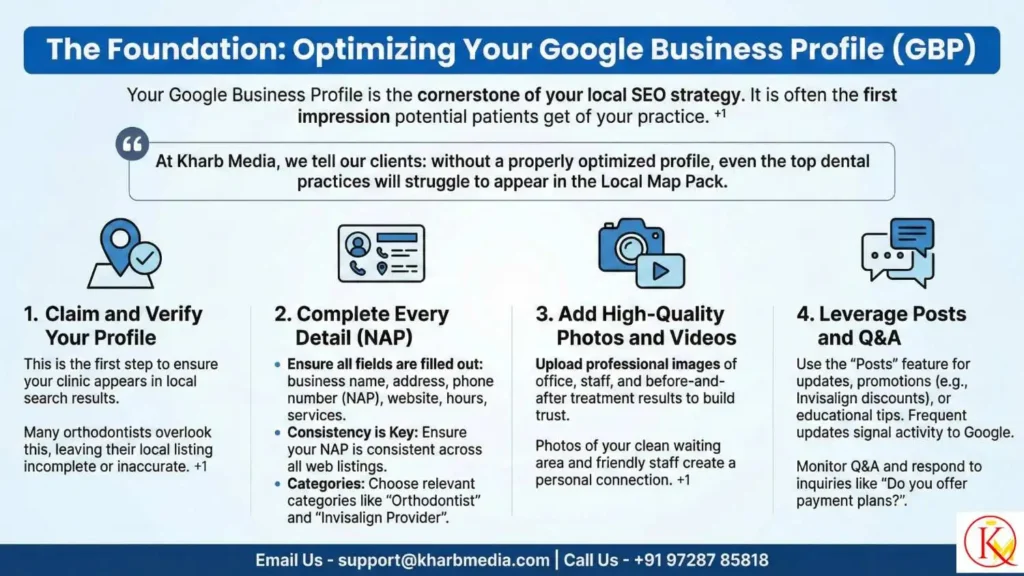
Your Google Business Profile (formerly Google My Business) is the cornerstone of your local SEO strategy. It is often the first impression potential patients get of your practice.
At Kharb Media, we tell our clients: without a properly optimized profile, even the top dental practices will struggle to appear in the Local Map Pack.
1. Claim and Verify Your Profile
This is the first step to ensure your clinic appears in local search results. Many orthodontists overlook this, leaving their local listing incomplete or inaccurate.
2. Complete Every Detail (NAP)
Ensure all fields are filled out, including your business name, address, phone number (NAP), website, hours of operation, and services offered.
Stop guessing and start ranking: Click here to chat on WhatsApp
- Consistency is Key: Ensure your NAP is consistent across all listings on the web.
- Categories: Choose the most relevant categories, such as “Orthodontist” and “Invisalign Provider”.
3. Add High-Quality Photos and Videos
Upload professional images of your office, staff, and before-and-after treatment results to build trust. Photos of your clean waiting area and friendly staff create a personal connection before the patient even walks in.
4. Leverage Posts and Q&A
Use the “Posts” feature to share regular updates, promotions (e.g., discounts on Invisalign), or educational tips. Frequent updates signal to Google that your profile is active. Also, monitor the Q&A section and respond proactively to common inquiries like “Do you offer payment plans?”.
Keyword Research: Finding High-Value Patients
Identifying the right keywords is vital. You need to know that it is the keywords that help you get the rank on Google.
Our senior strategists at Kharb Media use a “Union Strategy” to target three specific types of keywords:
1. Transactional Keywords (High Intent)
These indicate the searcher is ready to take action.
- “Braces cost near me”
- “Invisalign consultation [city name]”
- “Emergency dentist near me”
2. Informational Keywords (Research Phase)
These are used when patients are learning about treatments.
- “How long do braces take?”
- “Braces vs. Invisalign: which is better?”
3. Long-Tail Keywords
These are specific phrases that often have higher conversion rates. For example, “Affordable braces for kids in Los Angeles” reflects a very precise search intent.
Pro Tip: Use tools like Google Keyword Planner or SEMrush to analyze search volume and competition in your specific city.
On-Page SEO: Optimizing Your Digital Clinic
Optimizing your website’s on-page elements helps search engines understand your content and improves rankings.
Title Tags and Meta Descriptions
Include your primary keywords naturally. For example, a title tag like “Top Orthodontist in [City] – Braces & Invisalign Experts” works effectively.
- Meta Descriptions: These should be compelling to improve click-through rates (CTR). Example: “Looking for a trusted orthodontist in [City]? Get affordable braces… Book your free consultation today!”.
Structure and Headers
Organize your content with clear headings (H1, H2, H3) containing relevant keywords. Your H1 tag is the most important header and should clearly describe the page content.
Create Location-Specific Service Pages
Don’t just have one “Services” page. Create dedicated landing pages for every service you offer.
- Example: A page optimized for “Invisalign in Chicago” will rank better for searches in that city than a generic service page.
- Schema Markup: Add Local Business Schema to your website’s code to provide search engines with detailed business information like hours and reviews.
Specialized SEO Strategies by Practice Type
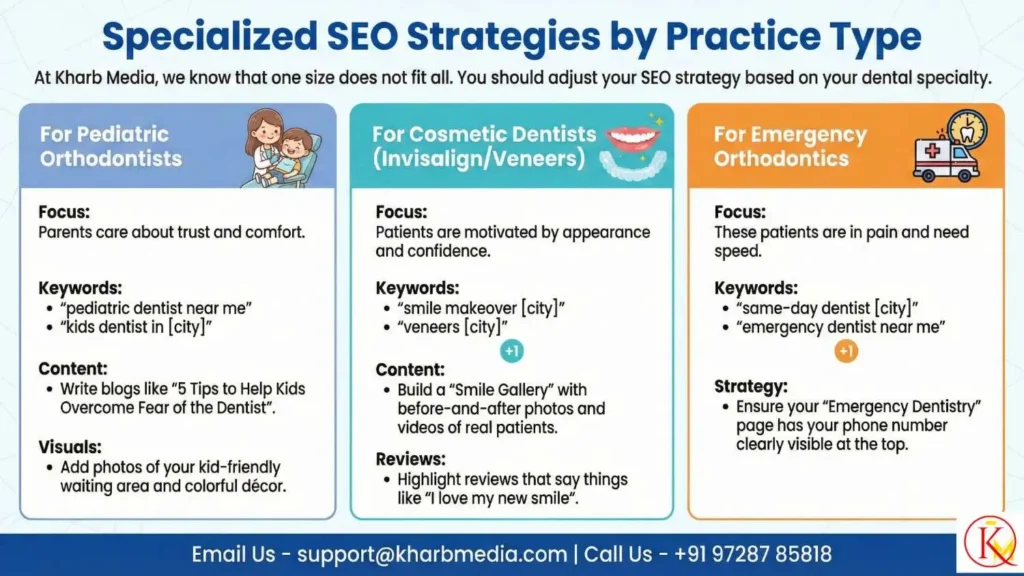
At Kharb Media, we know that one size does not fit all. You should adjust your SEO strategy based on your dental specialty.
For Pediatric Orthodontists
Parents care about trust and comfort.
- Keywords: “pediatric dentist near me”, “kids dentist in [city]”.
- Content: Write blogs like “5 Tips to Help Kids Overcome Fear of the Dentist”.
- Visuals: Add photos of your kid-friendly waiting area and colorful décor.
For Cosmetic Dentists (Invisalign/Veneers)
Patients are motivated by appearance and confidence.
Claim Your Free SEO Audit & Competitor Analysis: Click here to chat on WhatsApp
- Keywords: “smile makeover [city]”, “veneers [city]”.
- Content: Build a “Smile Gallery” with before-and-after photos and videos of real patients.
- Reviews: Highlight reviews that say things like “I love my new smile”.
For Emergency Orthodontics
These patients are in pain and need speed.
- Keywords: “same-day dentist [city]”, “emergency dentist near me”.
- Strategy: Ensure your “Emergency Dentistry” page has your phone number clearly visible at the top.
Content Marketing: Educating to Convert
Content is king in SEO. Regularly publishing high-quality, informative content helps attract visitors and signals to Google that your site is active.
Blog Strategy
Write about orthodontic topics relevant to your community.
- “The Benefits of Invisalign for Teens in [City Name]”
- “How to Prepare Your Child for Their First Dental Visit”
Video Content
Video content integration offers significant opportunities. Treatment explanation videos or virtual practice tours can improve engagement metrics.
Avoid AI Content
While AI tools are helpful for ideas, do not rely solely on AI-generated content. Search engines prioritize content that is original, authentic, and written for real people.
Reputation Management: The Power of Reviews
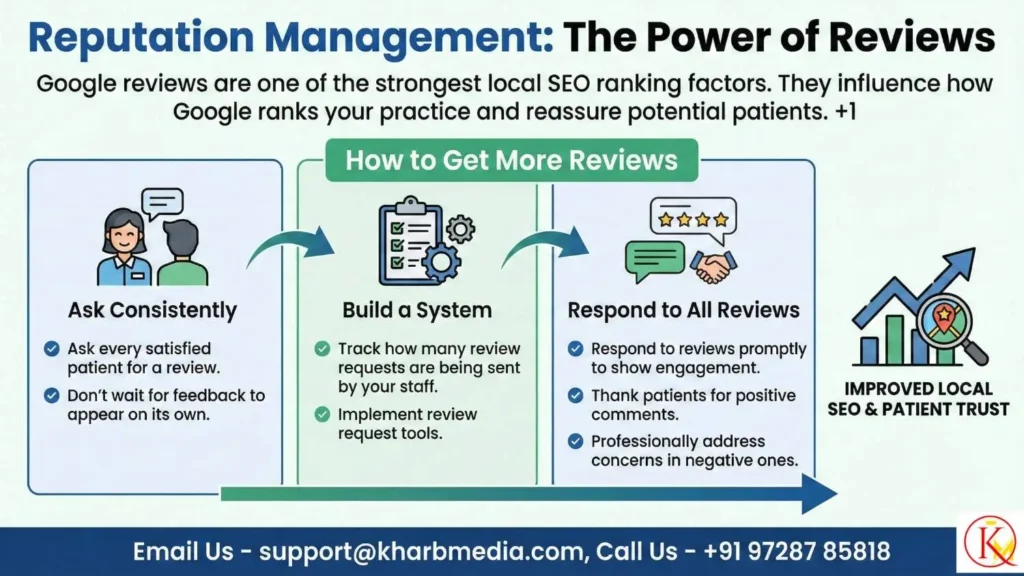
Google reviews are one of the strongest local SEO ranking factors. They influence how Google ranks your practice and reassure potential patients.
How to Get More Reviews
- Ask Consistently: Ask every satisfied patient for a review. Don’t wait for feedback to appear on its own.
- Build a System: Track how many review requests are being sent by your staff.
- Respond to All Reviews: Respond to reviews promptly to show engagement. Thank patients for positive comments and professionally address concerns in negative ones.
Local SEO vs. Google Ads: Where Should You Invest?
We often get asked: “Should I do SEO or Ads?”
- Google Ads (Short-Term): Great for immediate visibility. It puts your practice at the top instantly but is “pay-to-play”. Costs rise over time.
- Local SEO (Long-Term): Takes time (3-6 months), but builds sustainable visibility. Once you are ranking, the cost per new patient is much lower.
Our Recommendation: The best approach is often a mix. Use Ads for quick wins while building Local SEO in the background.
Tracking Your Success
You can’t improve what you don’t measure. Continuous monitoring is essential.
- Google Analytics: Track website traffic, user behavior, and conversion rates.
- Google Search Console: Monitor your site’s performance in search results and see which keywords drive traffic.
- Call Tracking: Implement dynamic number insertion to track which search terms generate phone inquiries.
Conclusion: Start Growing Your Practice Today
Achieving the #1 rank in local search results requires a comprehensive SEO strategy tailored to your orthodontic practice. You can significantly improve your online visibility by optimizing your Business Profile, conducting local keyword research, and staying engaged with your community.
Start implementing these strategies today, and watch your practice grow!.
Ready to dominate your local market: Chat on whatApp
Get Your Free SEO Audit From Kharb Media: Click here to chat on WhatsApp
Contact Our Team:
- Phone: +91 97287 85818
- Email: support@kharbmedia.com
People Also Ask (FAQs)
How long does it take for my orthodontic practice to rank on Page 1?
SEO is a marathon, not a sprint. While some technical fixes can show results in 30-60 days, it typically takes 3 to 6 months to see significant improvements in rankings and patient inquiries. In highly competitive urban areas, this timeline may be longer, requiring consistent content and review generation to overtake established competitors.
How much should I budget for Local SEO?
A realistic budget for effective dental SEO typically falls between $750 and $2,000 per month. The cost depends on your location’s competition level (e.g., ranking in a major city costs more than in a small town) and the quality of work. Beware of agencies charging very low fees, as they often neglect essential tasks like custom content and technical optimization.
Should I use AI to write my dental blogs?
No, absolutely not. Search engines like Google prioritize original, authentic content written for real people. AI-generated content often lacks the nuance and human insight that builds trust with patients. Relying heavily on automated writing can even lead to a drop in visibility if search engines detect it as low-quality or spam.
Is Google Ads or Local SEO better for getting new patients?
It depends on your immediate goals. Google Ads provides instant visibility and is excellent for urgent needs (like “emergency dentist”), but it stops working the moment you stop paying. Local SEO takes longer to build but offers a much lower cost-per-patient over time and sustainable long-term growth. For the best results, we recommend a mix: use Ads for quick wins while building your SEO foundation.
Why isn’t my practice showing up in the Google “Map Pack”?
If you aren’t in the top three map results, it is often due to an incomplete Google Business Profile or inconsistent business information (NAP) across the web. Other common reasons include a lack of high-qualitquality photos, very few reviews compared to competitors, or not having a verified listing