

With over 15+ years of combined experience, our senior strategists have seen how digital platforms completely change the game for healthcare practices. Social media marketing for physios is no longer a luxury; it is a fundamental requirement.
Social media provides a powerful platform to revolutionize patient interaction, brand awareness, and practice growth. By utilizing these tools effectively, you can easily bridge the gap between your clinical expertise and the people who need your help the most.
According to recent statistics, over 5.2 billion people are expected to use social media worldwide in 2026. This makes it a vital tool for healthcare outreach, allowing you to educate, inspire, and attract new patients.
Table of Contents
The Rising Importance of Social Media in Healthcare
Social media transforms how healthcare professionals engage with their communities. It provides a direct channel to reach patients and educate them about essential healthcare services.
Sharing informational posts about common issues like back pain or explaining different physical therapy techniques helps establish your credibility. Healthcare is deeply personal, and maintaining a professional social media presence fosters the trust needed to drive patient decisions.
Key Benefits of Social Media Marketing in Physiotherapy
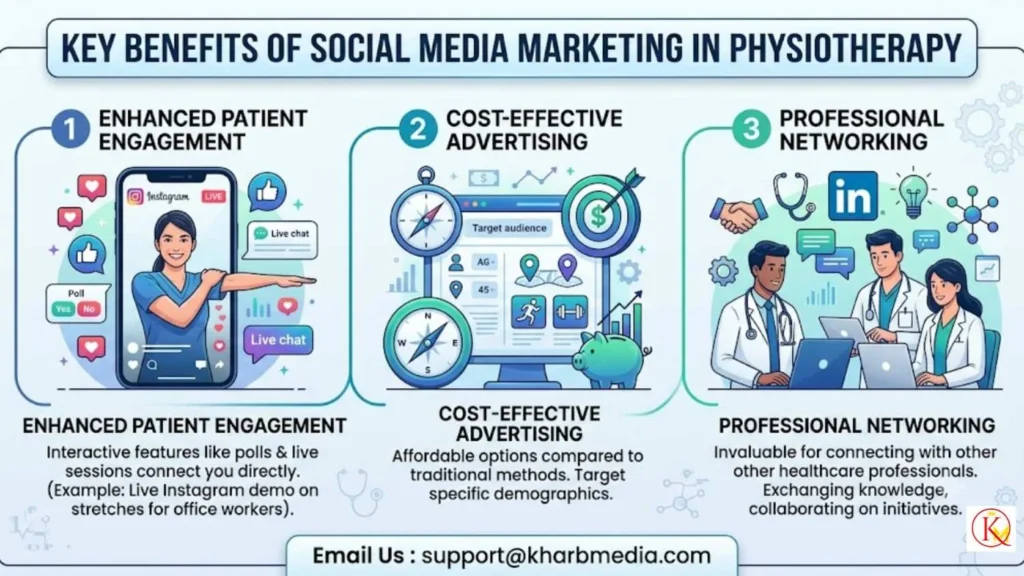
- Enhanced Patient Engagement: Interactive features like polls and live sessions enable you to engage directly with your audience. For example, a live Instagram session demonstrating stretches for office workers can encourage inquiries.
- Cost-Effective Advertising: Social media offers affordable advertising options compared to traditional methods. Platforms allow targeting based on specific demographics like location, age, and fitness interests.
- Professional Networking: Platforms like LinkedIn are invaluable for connecting with other healthcare professionals, exchanging knowledge, and collaborating on initiatives.
How to Build Your Physiotherapy Marketing Plan
Most clinics jump straight into posting without a clear foundation. A well-defined strategy is crucial, because without a plan, your efforts may not yield the desired results.
1. Define Your Unique Value Proposition
Every practice treats pain, so your messaging must communicate what makes you different. Develop messaging that speaks to specific patient needs, such as specialized sports injury expertise or a proven track record with specific conditions.
2. Map Your Patient Personas
Create detailed profiles of your ideal patients to guide your marketing efforts. Map out their demographics, specific pain points, and decision-making processes.
3. Set Measurable KPIs
Set specific, measurable goals that guide your decisions. Instead of vague targets, aim for specifics like increasing new patient bookings by 25% in six months. Track overall metrics like revenue growth, patient retention rates, and referrals.
Selecting the Right Social Media Platforms
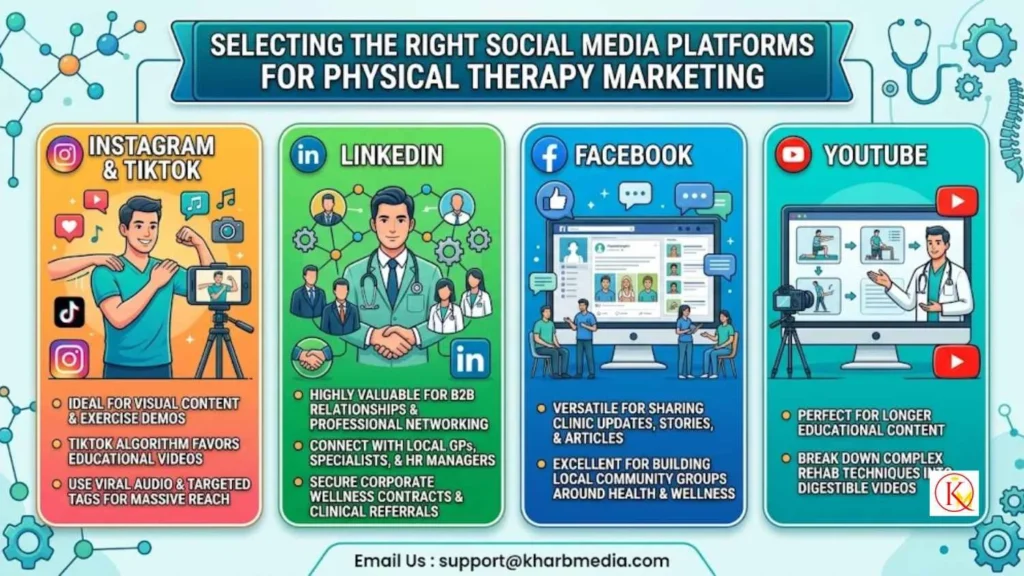
Not all social media platforms are created equal for physical therapy marketing. You must connect with potential patients in the spaces they already frequent online.
- Instagram & TikTok: These are ideal for visual content like exercise demonstrations. TikTok’s algorithm strongly favors educational content that keeps viewers watching. Using viral audio trends paired with targeted tags can massively increase your reach.
- LinkedIn: This platform is highly valuable for B2B relationships and professional networking. It is the perfect place to connect with local GPs, specialists, and HR managers to secure corporate wellness contracts and clinical referrals.
- Facebook: Facebook is highly versatile for sharing clinic updates, patient stories, and educational articles. It is excellent for building local community groups around health and wellness topics.
- YouTube: This platform is ideal for longer educational content. It allows you to break down complex rehabilitation techniques into digestible videos.
11 Social Media Content Ideas That Actually Convert
Consistently providing physical therapy social media ideas helps your clinic build credibility long before someone books an appointment.
- Highlight Key Services: Explain common conditions you treat, such as back pain or sports injuries.
- Introduce Your Clinic: Share your care philosophy and show the treatment space.
- Celebrate Staff & Team Spotlights: Introduce new hires and highlight their specific roles in patient care.
- Recruitment Posts: Attract top talent by showing what a typical workday looks like and how your clinic supports staff well-being.
- Share Patient Testimonials: Post short quotes with clear context highlighting improvements in mobility.
- Seasonal Content Themes: Offer travel-related pain advice during holidays or injury prevention tips during sports seasons.
- Fun Facts: Correct common physical therapy myths to encourage light engagement.
- Promote Your Newsletter: Explain exactly what subscribers receive and how often emails are sent.
- Behind-the-Scenes: Show training sessions, workshops, and everyday moments that reflect your culture.
- Support Awareness Days: Connect awareness topics to patient concerns without pushing services.
- Educational Videos: Focus on a two-minute exercise demo, which often performs better than a ten-minute comprehensive guide.
A Simple 12-Week Content Plan
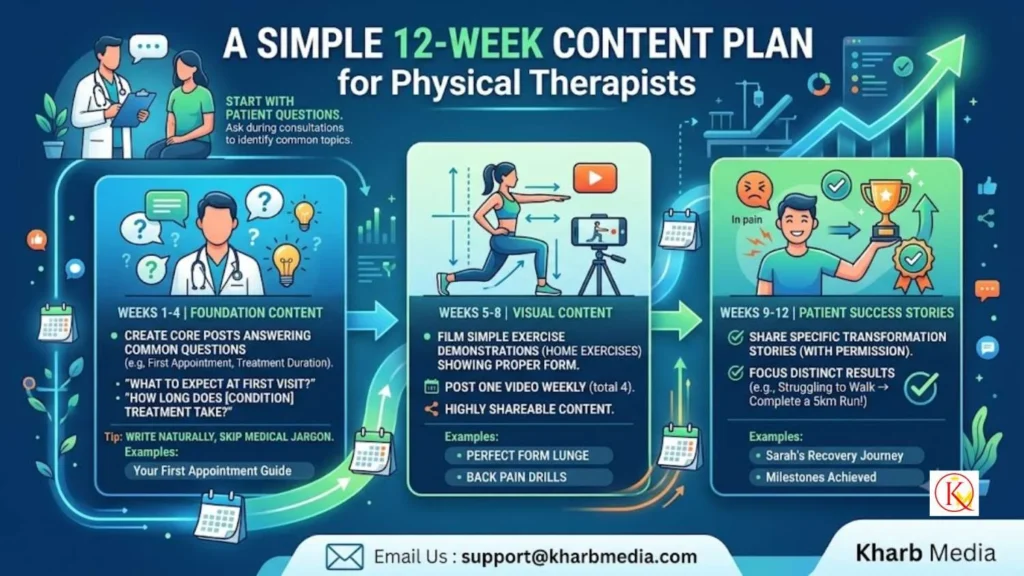
Start with the questions your patients actually ask during consultations.
Weeks 1-4: Foundation Content Create core posts answering common questions, such as what to expect at a first appointment or how long treatment takes for common conditions. Write naturally and skip the medical jargon.
Weeks 5-8: Visual Content Film simple exercise demonstrations showing proper form for exercises patients can do at home. Post one video weekly; these are often shared heavily among friends with similar injuries.
Weeks 9-12: Patient Success Stories Share specific transformation stories with permission. Focus on distinct results, like a patient who went from struggling to walk to completing a 5km run.
Addressing Industry Challenges
Managing Consent Respecting privacy is the most ethical and important step when using patient-related information. Always take audio or written consent before uploading anything on social media. If consent is not given, mask the identity to maintain privacy.
Combating Misleading Information You must ensure that your content is evidence-based and accurate. Collaborating with reputable sources and including citations can help combat misinformation.
Optimizing Your Digital Foundation
Social media works best when it supports a wider marketing plan. Your digital foundation ensures that social traffic actually converts into booked appointments.
Website and Local SEO Optimization
Marketing physiotherapy services starts with your website. Create separate, conversion-focused pages for each condition you treat. To capture local traffic, optimize your Google Business Profile by uploading photos of your clinic, treatment rooms, and team. Ensure your descriptions mention your specific location and the conditions you treat.
SEO Blog Content
Target blog topics your ideal patients actually search for using tools to identify search volume. Focus on long-tail keywords with commercial intent, such as “best physiotherapy exercises for” specific conditions.
Claim Your Free Digital Growth Strategy
Ready to dominate your local market? Our senior strategists are ready to analyze your current digital footprint and build a custom roadmap for your clinic email us : support@kharbmedia.com
Frequently Asked Questions (People Also Ask)
What type of content should physiotherapists post on social media?
Educational videos, patient success stories, health tips, and live Q&A sessions are highly effective.
Which platform is best for physiotherapists?
Instagram and YouTube are ideal for visual content, LinkedIn is best for professional networking, and Facebook works well for community building.
How often should a physical therapy clinic post?
Aim for three to five posts per week so your clinic stays visible without overwhelming your audience.
How do I measure social media success?
Track engagement rates, follower growth, and the number of patient inquiries generated.